

Behind the Cheese: Leonora & Leonora a Fuego
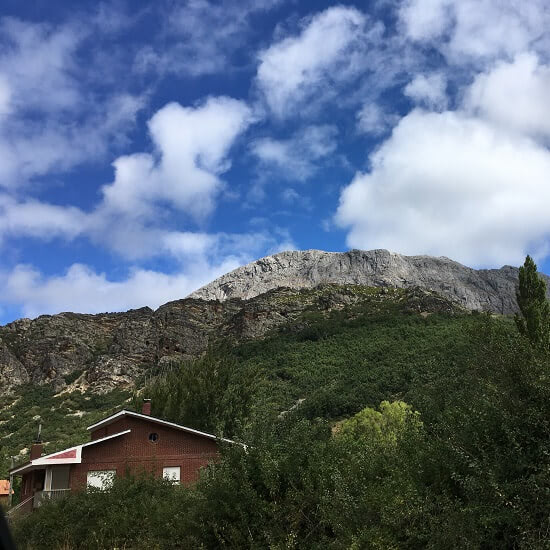
The story of Leonora begins in the valleys of northern Castilla y León. This sparsely populated, landlocked region is arid but fertile, and agriculture is a large part of its history. As in many rural areas, milk was made into cheese as a way to preserve it, thus many different types of rustic cheeses popped up at farms and homes throughout the region. Over time, more people flocked to cities and fled the more difficult lifestyle in the country. Industrial cheese flourished under dictator Francisco Franco, who set minimum quotas on cheese production and put most artisanal cheese producers, who could not keep up, out of business. Because of these factors, tragically, many of Spain’s traditional rustic cheeses were lost to time.
Oscar Fernando Marcos González grew up in Castilla y León, trying to find a place for himself in the rural world. He first worked as a mechanic at a mine, fixing machinery, but it soon become clear that this was the wrong choice for him. The key moment for him came when he stumbled upon a class offered by the government. They were subsidizing classes to help local residents learn a trade, stay put, and have a way to earn a living. Mining was the chief industry in the region, and these classes offered an alternative: cheesemaking. He found that this prospective career sparked something within him, and he sought out more opportunities to learn to make cheese. He focused primarily on local cheeses, learning primarily from women, who learned from their mothers and grandmothers. He also traveled to other European countries to learn different techniques to bring back to Spain with him.
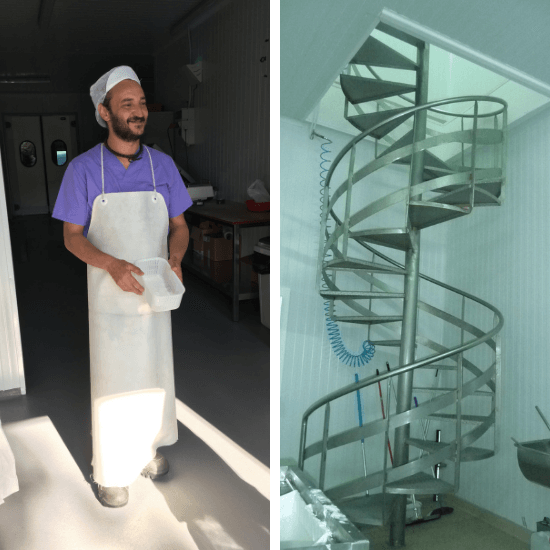
After gaining new skills and a wealth of knowledge, Oscar focused his efforts on one particular traditional cheese from León, called Babia y Laciana. It is a very acidic goat’s milk wheel that is made using lactic fermentation. Because of its harsh, spicy flavor, it was not an immediate success, but it did help Oscar and his wife Patricia establish their first cheese plant. Housed in a very old structure, Oscar had to run cheese up a spiral staircase to the small second-floor aging room, while Patricia worked in quality control. It was tight, but he had finally found his passion in life and continued to hone his craft. It was during this time that Michele Buster first met Oscar and visited the plant.
Michele, explains: “I was at the trade show Alimentaria over 20 years ago. I had wanted to say hi to our Valdeón producers and went to their booth. It was the end of the show and everyone was breaking down. I saw an oblong white cheese in the refrigerated case that sparked my curiosity. When I asked about it, I was told I could cut into it, which I did right away, and I loved it. One of the producers still in the booth generously provided me with Oscar’s cell number, which I promptly called since I was so excited. Oscar was driving his truck and had to pull over…I couldn’t hold back and burst out telling him I loved his cheese and asked if he would be willing to sell cheese to us in the U.S. and he said yes!
“I was at the trade show Alimentaria over 20 years ago. I had wanted to say hi to our Valdeón producers and went to their booth. It was the end of the show and everyone was breaking down. I saw an oblong white cheese in the refrigerated case that sparked my curiosity. When I asked about it, I was told I could cut into it, which I did right away, and I loved it. One of the producers still in the booth generously provided me with Oscar’s cell number, which I promptly called since I was so excited. Oscar was driving his truck and had to pull over…I couldn’t hold back and burst out telling him I loved his cheese and asked if he would be willing to sell cheese to us in the U.S. and he said yes!
I shipped the rest of the cheese in one of our containers and it arrived at our warehouse a mottled gray instead of bone-white. Loving the cheese that way, we wanted to have it arrive always like that. We soon found out the hard way, however, that it wasn’t possible to consistently get the cheese looking like that. If mold isn’t controlled, it takes over a cheese plant and becomes impossible to control and eradicate. After much trial and error, we arrived at our current iteration of Leonora, one that has penicillium candidum on the rind. It creates the beautiful white bloomy rind that encases an amazingly creamy and stellar cheese.”
-Michele Buster
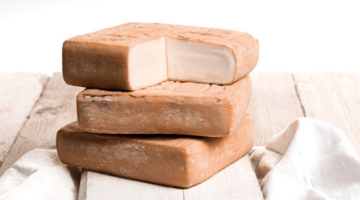
After a lot of work on his recipe, Oscar eventually arrived at something less acidic and more appealing to a wide range of palates. Though based on the original recipe for Babia y Laciana, he wanted to modify the shape to distinguish his cheese. He chose the shape of a lingote, by adobe brick used locally to build houses. We decided to name his new cheese Leonora for the US market, after his beloved home region. He is part of the new generation of Spanish cheesemakers whose goal is to rescue and conserve their cultural heritage through cheese. He maintains the unique character of these rustic valley cheeses but modernizes the process, proving that cheesemaking can be artisanal, traditional, and modern all at the same time.
With 20 years of cheesemaking under his belt, Oscar now makes a variety of goat cheeses with milk from local Murciana and Alpina goats. He is helped in the cheese plant by his assistant, Ana. His company is called Quesos Facendera, after an ancient practice where all inhabitants of a village would work together for a common good – shoveling snow, creating dams, building structures, and maintaining roofs.
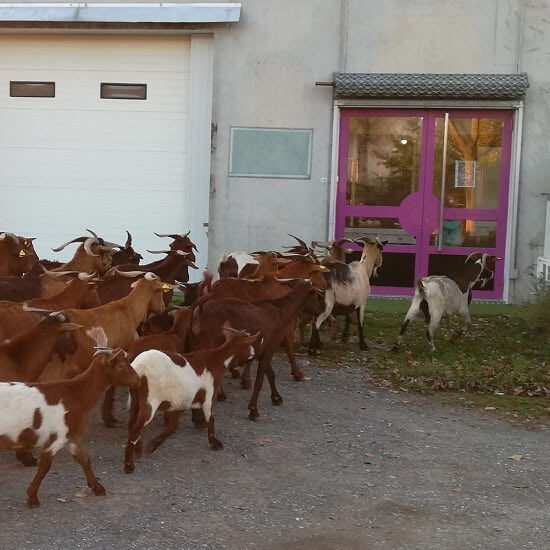
Even after many years, the company continues that spirit of solidarity today. The construction of the special wooden box and straw-like mat that protect the cheeses are outsourced to local people with disabilities. Oscar also teaches workshops to aspiring cheesemakers young and old to ensure that this knowledge is accessible to everyone and will not be lost to time.
Leonora®
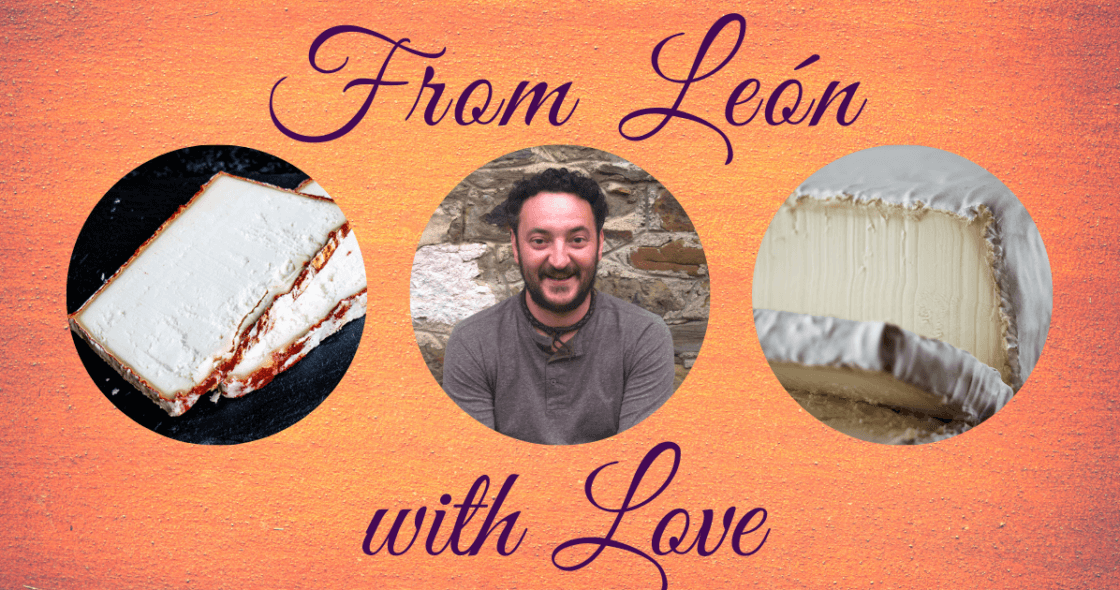
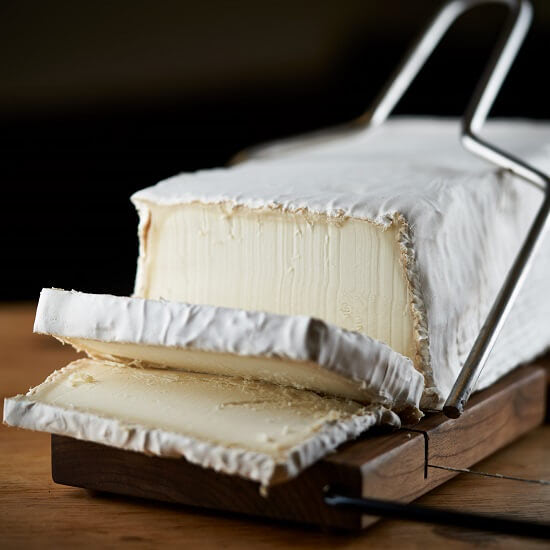
This goat cheese represents the best of modern Spanish cheesemaking. Oscar’s innovative production process and special packaging allow the cheese to continue growing its soft-ripened rind as it journeys across the Atlantic so that it arrives in optimal condition. Fudgy and slightly crumbly in its interior, the paste is surrounded by a beautiful creamline that grows in intensity as it ages past its initial 40 days of aging. The rind is made up of fluffy white mold, creating a singular texturally perfect bite. Lush and lemony, with a sour cream tang, Leonora balances its acidity with richness. For goat cheese lovers, it will be a revelation, and they will love the mushroomy notes that develop as it ages further.
Leonora® a Fuego
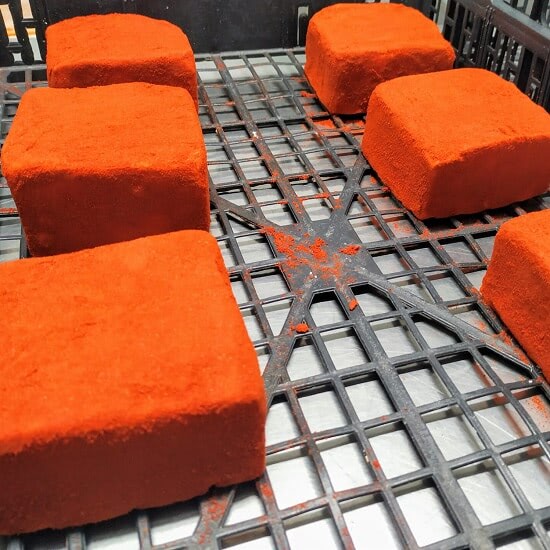
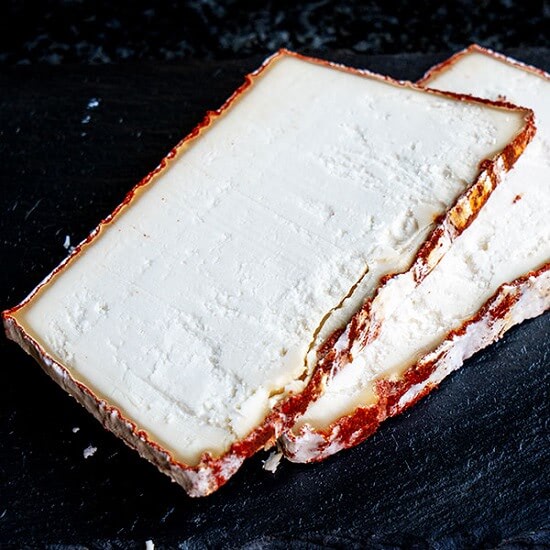
Awhile back, we asked Oscar to play around with a twist on Leonora using paprika. Its recent highly anticipated arrival was worth the wait. Leonora a Fuego uses the same recipe as the original, but with an added layer of spicy Pimentón de la Vera on the rind. He coats the cheeses in the smoked paprika before aging, so that the snowy white rind develops on top of it.
When you cut into the cheese, a gorgeous thin layer of the rust-colored pimentón is visible. But this addition is not just aesthetic, it also adds a new dimension to the lemony goat cheese. The smokiness blends seamlessly with the pleasantly acidic paste, and your tongue gets a hit of subtle spiciness in the finish. It’s a sublime example of Oscar’s ever-growing creativity and skill.

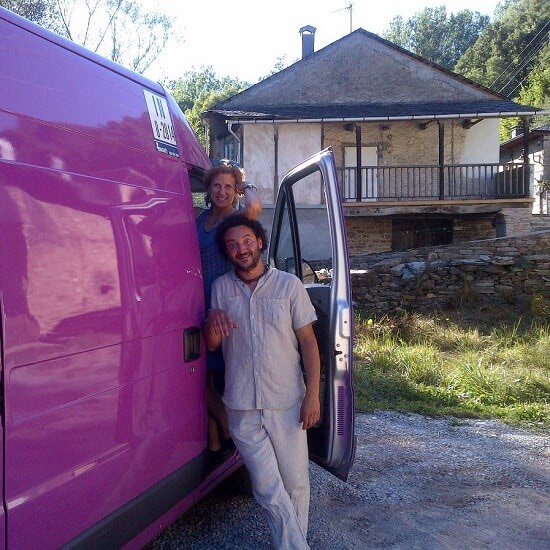
With a vivacious personality and great sense of humor, Oscar is one of our most colorful producers, quite literally. He loves the color purple so much that he painted the door of his cheese plant purple, bought a purple van, wears purple scrubs when making cheese, and even uses purple food safety materials.